Sustainable Cleaning Products Buying Checklist: Six Things to Check
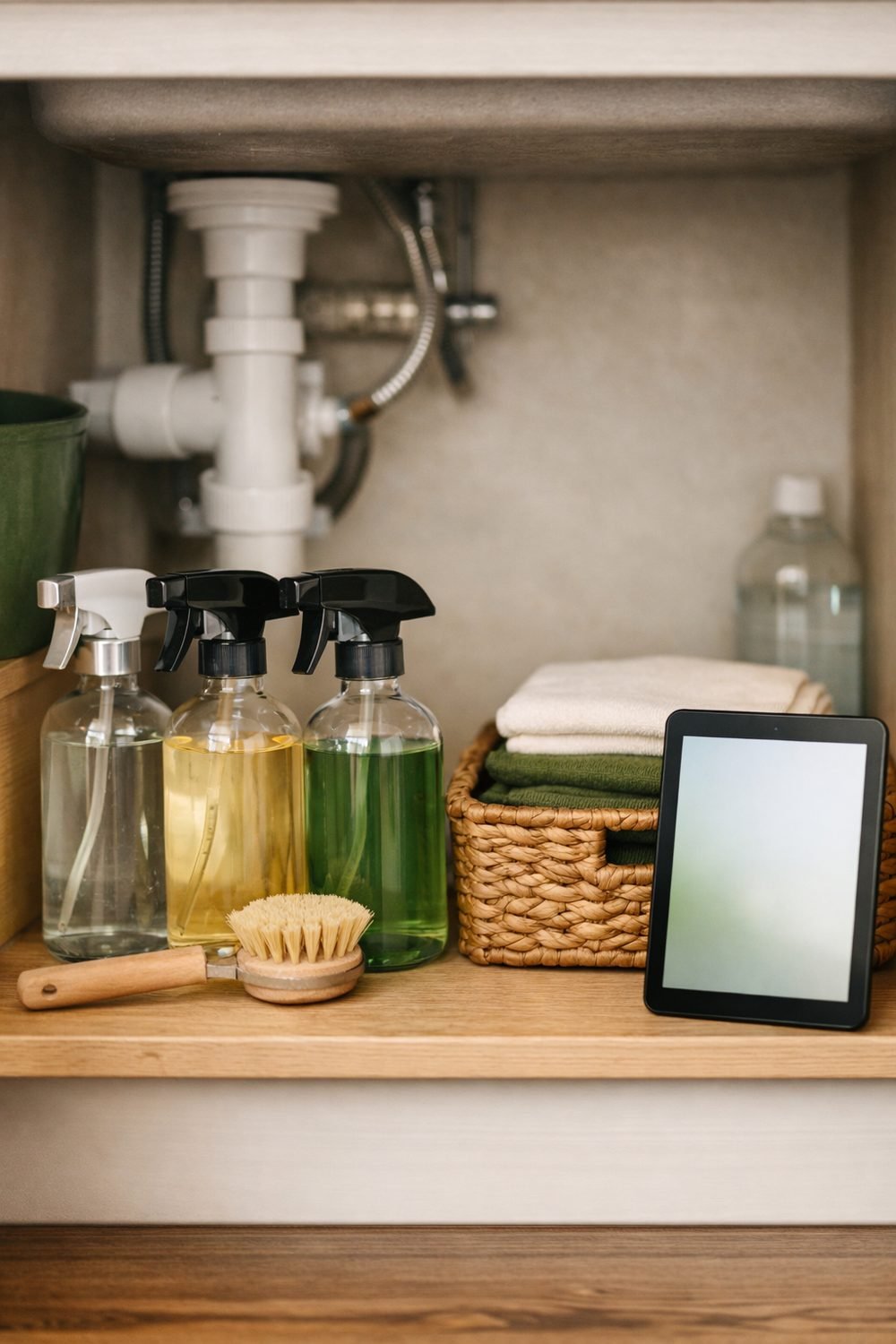
Buying sustainable cleaning products sounds simple until you're standing in the aisle. One bottle says "plant-based," another says "eco," and a third has a leaf on the label and not much else. Before you add anything new to your cupboard, it helps to slow down and run through a short set of checks. These six take a minute or two once you get used to them, and they'll save you money and clutter.
This isn't about buying the "perfect" product. It's about picking things you'll actually use, that work on your home, and that don't create more waste than they're worth.
1. Do You Actually Need It?
This is the check most people skip, and it's the one that matters most. The greenest cleaner is often the one you didn't buy. Many homes get by with a few basics: a general surface spray, a dish soap, a bathroom cleaner and maybe something for floors. Specialty sprays for every single room usually end up half-used at the back of a cupboard.
Before you buy, open your cupboard and look. Do you already have something that does this job? For example, a family that owns a good all-purpose spray probably doesn't need a separate "kitchen counter" spray and a separate "dining table" spray. They often do the same thing with a different picture on the front.
Practical tip: Keep a short list on your phone of what cleaners you own and what each one is for. When you're in the shop and something catches your eye, check the list first. If it overlaps, walk on.
2. Check the Packaging Before the Promises
A product can have a lovely formula and still come in a bulky plastic bottle you'll throw out in a month. Packaging is one of the easiest things to judge, because you can see it right there in your hand.
Look for refills, concentrates, or bottles made from recycled material. Concentrates are worth a closer look. You mix them with water at home, so you're not paying to ship water around, and one small bottle can replace several big ones. Refill pouches are another option, though they're still packaging, so check whether they can be recycled where you live.
Solid bars and tablets are also around now for things like dish soap and toilet cleaning. Some people love them. Others find them fiddly. Neither is wrong, so pick what fits your habits.
Practical tip: Keep one sturdy spray bottle you like and reuse it with concentrate refills. Label it clearly with what's inside and the date you mixed it.
3. Read What the Label Really Says
Flip the bottle over. The back is where the useful information lives. You want to see a list of ingredients, safety notes, and clear directions for use. If a product hides most of this or keeps it vague, that tells you something.
Pay attention to the safety warnings, even on products marketed as natural or gentle. "Natural" doesn't mean you can splash it around without care. Some plant-based ingredients and essential oils can still irritate skin or eyes. Follow the directions on dilution, ventilation and gloves. If you have questions about a specific ingredient, especially with allergies or health concerns in the home, check the seller's page or ask a pharmacist or doctor.
Directions matter too. A common mistake is using a concentrated cleaner at full strength, thinking more is better. It usually just leaves residue and runs out faster.
Practical tip: Never mix cleaning products together unless the label says it's safe. Some combinations can give off harmful fumes.
4. Is the Green Claim Clear or Just Pretty Words?
This is where a lot of sustainable household cleaning products get tricky. Words like "green," "eco," "natural" and "earth-friendly" sound good, but on their own they don't promise anything specific. Anyone can print them on a label.
A more useful sign is a named certification from a recognised organisation. If you see a logo you don't know, look it up on the certifier's own website to see what it actually covers. Some focus on ingredients, some on packaging, and some on how the product breaks down after use. A logo is a starting point, not a final answer.
Honestly, a lot of "best eco friendly cleaning products" lists online lean heavily on marketing words. Be a little sceptical of any product, or any list, that can't tell you what makes it better in plain terms.
Practical tip: Ask one question: "Green how?" If the label or the seller's page can't answer that clearly, treat the claim as decoration.
If you'd like a simple way to keep your routine on track while you sort out your cupboard, the Free Weekly Cleaning Checklist is yours when you join the email list.
5. Will It Suit Your Surfaces?
A cleaner that's great on a tiled floor might be terrible on a wooden table. This is the check that protects the stuff you already own, and replacing a damaged countertop is far from sustainable.
Read the label for any notes on wood, natural stone, glass, stainless steel and sealed or unsealed surfaces. Acidic cleaners, including many vinegar-based ones, can dull or etch natural stone like marble. Some products leave streaks on glass or steel. If the label says nothing about a surface you care about, look on the seller's page or ask them directly.
Your own surfaces matter too. If you're not sure what your counters are made of, it's worth finding out before you clean them with anything new. The care instructions from the maker usually say what to avoid.
Practical tip: Always test a new cleaner on a small, hidden spot first, like the inside edge of a cupboard door or under a rug. Wait a little while, then check for dullness, marks or colour change.
For a handy reminder of which cleaners suit which surfaces, the Natural Cleaning Quick-Reference Cards below this post are made to stick on the inside of a cupboard door.
6. Plan How You'll Store It Safely
Sustainable cleaning isn't only about what you buy. It's also about keeping products in good shape so they last and don't go to waste, and keeping everyone in the house safe.
Keep cleaners in their original containers with the lids tightly closed. That way the label, warnings and directions stay with the product. If you decant a concentrate into a reusable bottle, label it clearly so no one mistakes it for something else. And never store cleaners in old drink bottles, even for a day.
Store everything out of reach of children and pets. A high shelf or a cupboard with a child lock works well. Many people also keep cleaners away from food and away from heat, since some products don't do well in a hot spot like a sunny windowsill.
Practical tip: Once a season, do a quick cupboard check. Use up what's open, get rid of anything expired the way the label suggests, and notice which products you never reach for. That's useful to know before your next shop.
A Quick Word on Sustainable Home Cleaning Habits
Products are only part of the picture. Reusable cloths instead of paper towels, a simple routine so jobs don't pile up, and using the right amount of cleaner all make a real difference. A planned routine also stops you from buying "emergency" products in a rush. The Cleaning Charts and Routine Printable Pack below this post can help if you like having a plan on paper.
FAQ
Are sustainable cleaning products as effective as regular ones?
Many work well for everyday cleaning, but it depends on the product and the job. Read the label to see what it's designed for, and test it on a small area first. For tough jobs, check the seller's page for guidance.
Is "natural" the same as safe?
No. Natural ingredients can still irritate skin, eyes or lungs, so follow the safety notes on the label. If you have specific health worries, ask a pharmacist or doctor.
What's the easiest switch to start with?
Many people start with an all-purpose spray in concentrate form, since it replaces several bottles. It's a small change that cuts packaging without much effort.
Should I throw out my old cleaners and replace them all?
Usually not. Using up what you have and replacing items as they run out wastes less. Check the label for how to dispose of anything you no longer want.
Ready to make your next shop a little easier? Grab the Free Weekly Cleaning Checklist by joining the email list, then take a look at the Natural Cleaning Quick-Reference Cards and the Cleaning Charts and Routine Printable Pack below this post if you'd like extra help keeping things simple.
Printables and tools that can help
Natural Cleaning Quick-Reference Cards
14 natural cleaning cards with safety notes and a favorites...
See detailsCleaning Charts and Routine Printable Pack
Daily reset, weekly rotation, monthly and seasonal checklists, guest and chore-sharing...
See details