Reusable Household Products: Questions to Ask Before You Buy
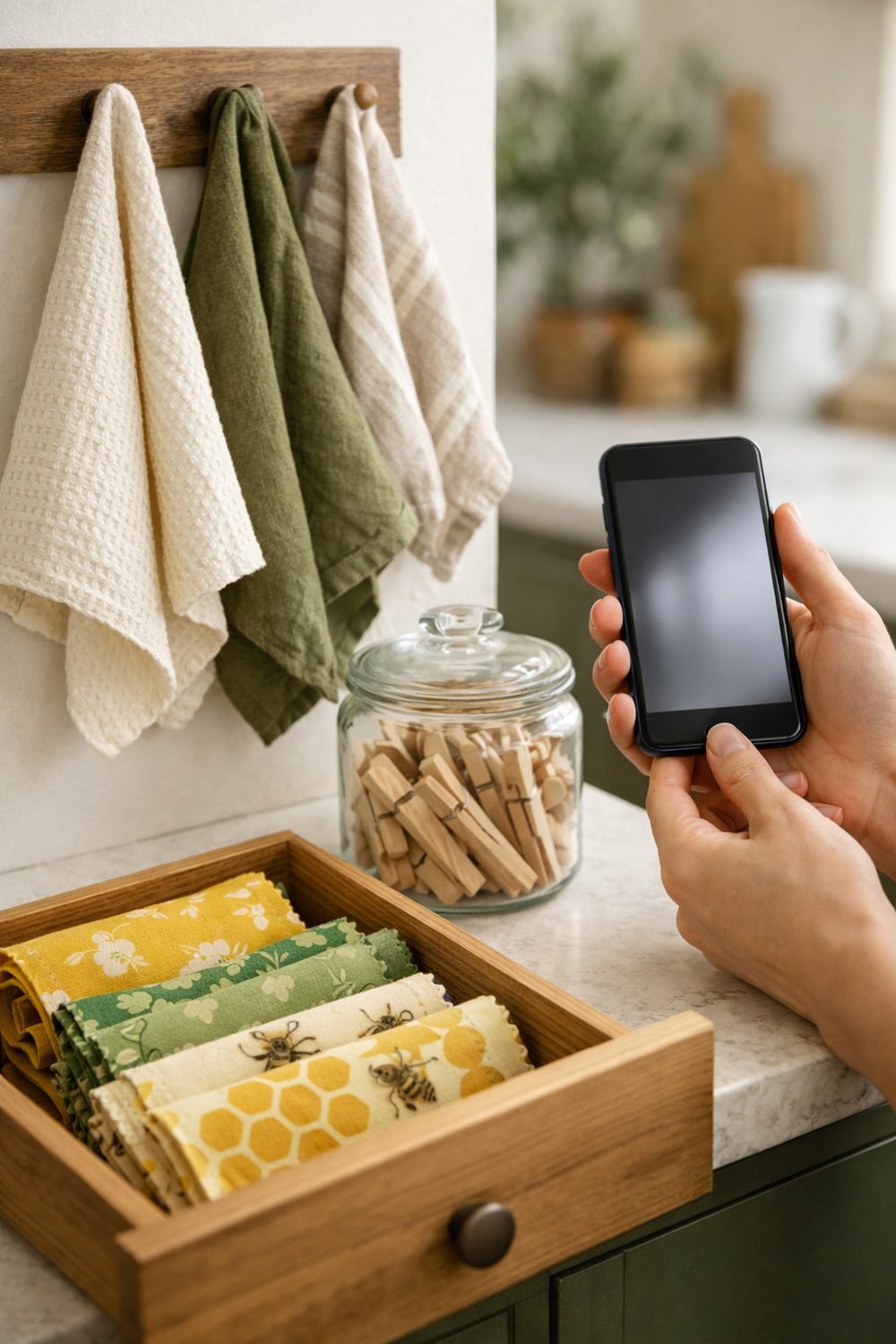
Reusable household products can cut a lot of waste, but only if they actually fit the way you live. A drawer full of unused beeswax wraps and silicone bags doesn't help the planet much. Before you buy, it helps to slow down and ask a few honest questions. Here are the ones worth asking.
1. What single-use item will it replace?
Start by naming the exact thing you'll stop buying. Paper towels, cling film, plastic produce bags and bottled water are common ones. If you can't name the item, the reusable version is probably a "nice to have," not a swap.
This step also stops you from buying duplicates. Plenty of people end up with five water bottles and a cupboard of tote bags, while their paper towel habit stays the same. Pick the waste you actually see in your bin each week and work from there.
Practical tip: Look in your kitchen trash for a few days. Whatever shows up most is your best first swap.
2. How often will you really use it?
Daily items give you the most value. A cloth you use to wipe the counter every evening pays off fast. A fancy reusable gadget you reach for twice a year mostly takes up space.
Be honest about your habits, not your hopes. If you rarely pack lunches, a full set of food containers and wraps might sit unused. Something like reusable vegetable bags makes more sense if you shop for fresh produce every week.
Practical tip: Ask yourself, "Would I have used this at least three times last week?" If the answer is no, wait.
3. How do you clean it, and will you bother?
This is where a lot of good intentions fall apart. Some items go straight in the washing machine or dishwasher. Others need hand washing, air drying or special care. If cleaning feels like a chore, the item will slowly drift to the back of a cupboard.
Check the care instructions on the seller's page before you buy. Look for clear answers to questions like these:
- Is it machine washable or dishwasher safe?
- Does it need to dry fully before you store it?
- Will it stain or hold smells over time?
- Can you clean it with products you already own?
Practical tip: Choose items that fit the cleaning routine you already have. If you run the dishwasher every night, dishwasher-safe beats "hand wash only" almost every time.
4. How long will it last?
A reusable item only reduces waste if it outlasts the single-use things it replaces. Thin, flimsy versions can wear out quickly and end up in the bin anyway. Look at the material, how it's stitched or sealed, and whether the seller offers any kind of warranty.
Reviews help here, but read them with care. A five-star review from someone who got the item yesterday tells you very little. Look for people who mention using it for several months, and note what broke or faded first.
Durability matters for water bottles too. A lightweight reusable water bottle is great for carrying around, but very thin walls can dent easily. Think about where it'll go: a gym bag, a car cup holder or a toddler's backpack all ask different things of a bottle.
Practical tip: Search reviews for words like "months," "still" or "after a year" to find long-term feedback faster.
5. Where will it live in your home?
This one sounds small, but it makes a big difference. If your reusable cloths don't have a spot, they'll pile up on the counter and you'll grab paper towels instead. Items that are easy to reach get used. Items that are hidden get forgotten.
Plan the spot before you buy. That might be a hook by the sink for cloths, a basket for clean rags, or a small drawer for food wraps. For shopping bags, many people keep them by the front door or in the car so they're not left at home.
Practical tip: Also plan where used items go. A small bin or bag for dirty cloths keeps them from ending up all over the house before laundry day.
6. Are eco friendly household cleaning products part of the plan?
Reusable cloths and mops work best when they're paired with cleaners you're happy with. Some people switch to refillable spray bottles and concentrated cleaners at the same time. That can cut down on plastic bottles, but only if you'll actually refill them.
Be careful with big green claims on labels. Words like "natural" or "eco" don't always mean much on their own. Read the ingredient list and safety info on the seller's page, and if you have allergies or sensitive skin, ask a pharmacist or doctor what's safe for you.
Practical tip: You don't need a whole new cleaning cupboard. Replace one product when it runs out, rather than throwing out half-full bottles.
If you like having a simple routine to follow, the Free Weekly Cleaning Checklist is yours when you join the email list.
7. Is the extra feature worth it?
Lots of reusable items come with add-ons: built-in filters, special lids, timers, apps. Some are useful. Many are just extra parts that can break or need replacing.
A reusable water bottle with filter is a good example. If your tap water tastes off to you or you refill on the go a lot, the filter might be worth it. But filters usually need to be swapped out, so check how often, what replacements cost on the seller's page, and whether you can still buy them easily.
Practical tip: Ask yourself if you'd still want the item without the feature. If yes, the simpler version may serve you just as well.
8. What happens when it wears out?
Every reusable item will reach the end of its life someday. Before you buy, it's worth knowing what happens then. Some cotton cloths can be cut into rags, then composted if they're fully plant-based. Some metals can be recycled. Mixed materials are often the hardest to deal with.
Look for products made from one main material when you can. Check with your local council or waste service to see what they accept, since rules vary a lot from place to place.
Practical tip: Give old items a second job before tossing them. A worn dish towel can become a rag for the garage or a cloth for cleaning shoes.
9. Do you need it right now?
This might be the most useful question on the list. The greenest choice is often to use what you already have. Old jars can store leftovers. Old t-shirts make decent cleaning rags. A plastic container you already own is better used than thrown out for a "nicer" one.
Sustainable household products are a good idea, but buying a whole matching set at once can create its own kind of waste. A slow, one-swap-at-a-time approach is cheaper and tends to stick better.
Practical tip: Keep a short "swap list" on your fridge. Add things as your current items run out, and only buy then.
Making reusable household products work for you
If you like planning things out on paper, the Green Living Planner and Checklist Bundle below this post can help you track your swaps and spot patterns in what you throw away. For a gentler starting point, the Green Home Starter Guide, also below, walks through simple first steps without pushing you to change everything at once.
FAQ
Are reusable products always better for the environment?
Not always. A reusable item has to be used many times to make up for the materials and energy it took to make it. That's why how often you'll use it matters more than how green it looks.
What's the easiest swap to start with?
Many people start with cloths instead of paper towels, or a reusable bottle instead of bottled water. These are used often, easy to clean and don't need much planning. Pick whatever shows up most in your bin.
Are eco friendly household products safe for kids and pets?
It depends on the product. "Eco" on a label doesn't guarantee it's safe for everyone. Read the safety info on the seller's page and ask your vet or doctor if you're unsure.
How many reusable bags do I actually need?
Usually fewer than you think. A few sturdy shopping bags and a handful of produce bags cover most weekly shops. Keeping them where you'll remember them matters more than owning a lot.
Ready to make your first swap? Grab the Free Weekly Cleaning Checklist by joining the email list, then take a look at the Green Home Starter Guide and the Green Living Planner and Checklist Bundle below this post if you'd like a little more help getting started.
Printables and tools that can help
Green Living Planner and Checklist Bundle
A 30-day goal page, weekly planner, two setup checklists, trackers and a weekly...
See detailsGreen Home Starter Guide
An eight-chapter beginner's guide to green living with myths, vocabulary and a 30-day...
See details